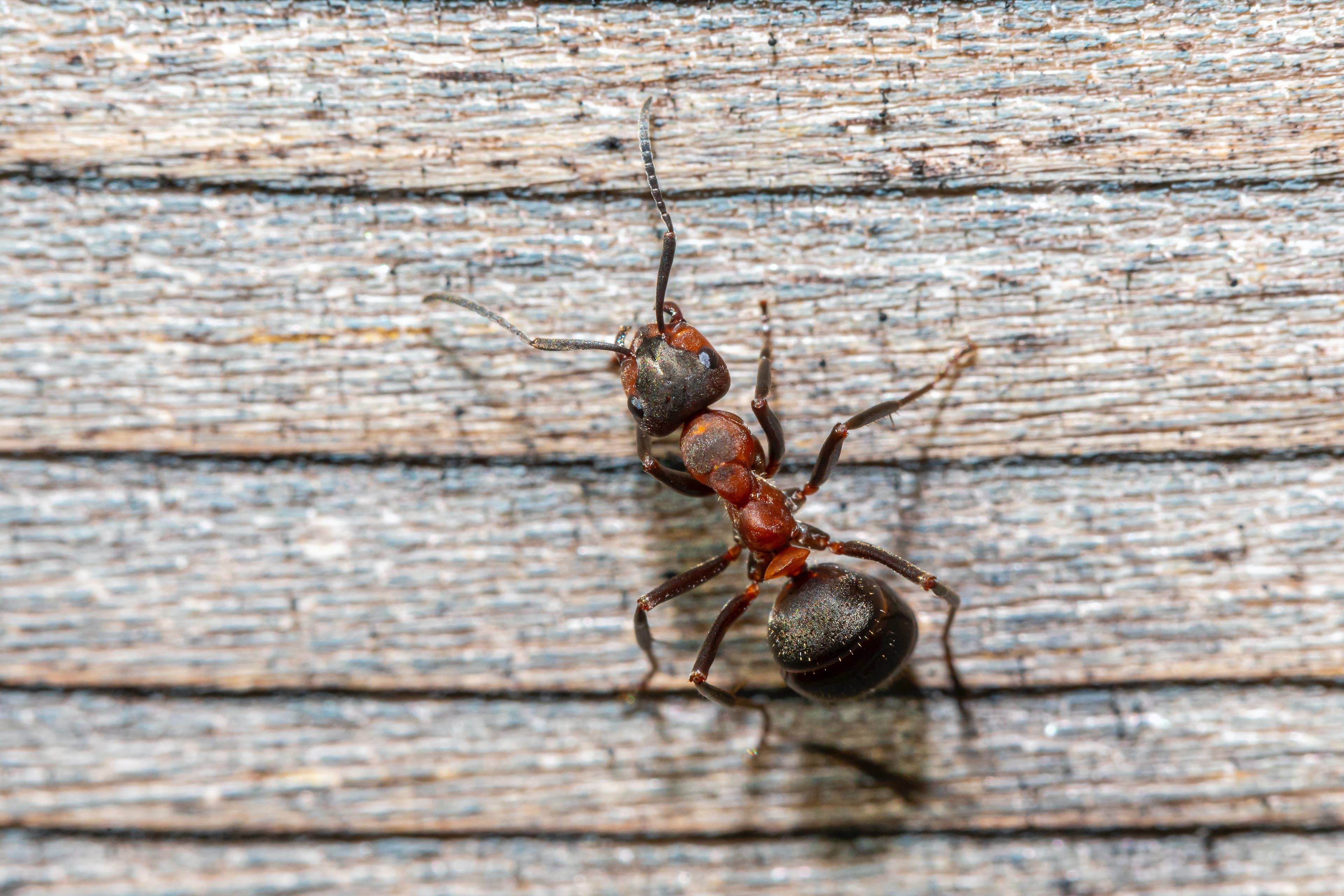
Professional Ant Control
From carpenter ants to household invaders, we identify the species and eliminate the colony at its source with targeted treatments that stop the trail.
Targeted Ant Colony Elimination
Ants are social insects that live in colonies ranging from a few dozen to hundreds of thousands of individuals. Seeing a few ants in your kitchen means there is a much larger colony nearby, often hidden inside walls, under foundations, or in nearby soil. Different ant species require different treatment approaches — carpenter ants can cause structural damage by excavating wood for nesting, while odorous house ants contaminate food and are notoriously difficult to eliminate without professional help. Our technicians identify the exact species, locate the colony, and apply targeted treatments that eliminate the queen and the entire colony, not just the visible foragers.
- Colony Elimination
- Carpenter Ant Control
- Barrier Treatments
- Prevention Plans
Common Ant Species We Treat
Carpenter Ants
Carpenter ants are large black or dark brown ants that excavate wood to create nesting galleries. Unlike termites, they don't eat wood but can cause significant structural damage over time. They prefer moist or damaged wood and are often found near plumbing leaks or exterior wood trim.
Odorous Ants
Odorous house ants are small brown ants that emit a distinctive rotten-coconut smell when crushed. They form large multi-queen colonies and create persistent foraging trails into kitchens and bathrooms seeking sugar and moisture.
Household Ants
Pavement ants and other common household ant species nest in soil, under slabs, and along foundations. They enter homes through cracks and gaps seeking food and water, forming visible trails along walls and countertops.
Our Ant Control Process
Every treatment follows our proven three-step approach to eliminate pests and keep them from coming back.
Inspect
We identify the ant species, locate the colony and satellite nesting sites, and trace foraging trails to understand how ants are entering your home.
Treat
Species-specific treatments are applied including targeted baits that worker ants carry back to the colony, perimeter barrier treatments, and direct colony treatments where accessible.
Prevent
We apply exterior barrier treatments around your home's foundation and address moisture issues or wood damage that attract carpenter ants. Quarterly treatments maintain protection year-round.
Signs of a Ant Problem
- Visible ant trails along walls, countertops, or floors, especially near food or water sources
- Small piles of sawdust-like material near wood structures (carpenter ants)
- Winged ants emerging indoors, especially in spring (sign of a mature colony)
- Rustling sounds inside walls or wood trim (carpenter ants)
- Ants clustering around pet food bowls, sticky spills, or trash cans
Ant Prevention Tips
Reduce your risk of infestation with these expert recommendations.
Keep kitchen surfaces clean and store sweet or sticky foods in sealed containers.
Fix moisture problems — repair leaky pipes, improve ventilation in damp areas, and replace water-damaged wood.
Trim tree branches and vegetation away from your home's exterior to eliminate ant bridges.
Seal cracks and gaps around your foundation, windows, doors, and where utility lines enter.
Remove dead trees, stumps, and decaying wood from your property that can harbor carpenter ant colonies.
Frequently Asked Questions
Why do I keep seeing ants even after spraying?
Over-the-counter sprays only kill the ants you can see — the foragers. The colony, including the queen, remains hidden and continues producing new workers. Professional treatments use baits that workers carry back to the colony, eliminating it at the source.
Are carpenter ants as destructive as termites?
Carpenter ants cause structural damage more slowly than termites, but left untreated, they can significantly weaken wood structures over several years. The key difference is carpenter ants excavate wood for nesting but don't eat it, while termites consume wood for nutrition.
How do you find the ant colony?
Our technicians follow foraging trails, inspect common nesting areas (wall voids, under insulation, near moisture sources), and use species-specific knowledge to locate colony and satellite nest sites. For carpenter ants, we also look for frass piles — sawdust-like debris expelled from galleries.
Ready to get started?
Call now and get $50 off pest control.
Call before 2pm and get same-day service.
Call Now and Save