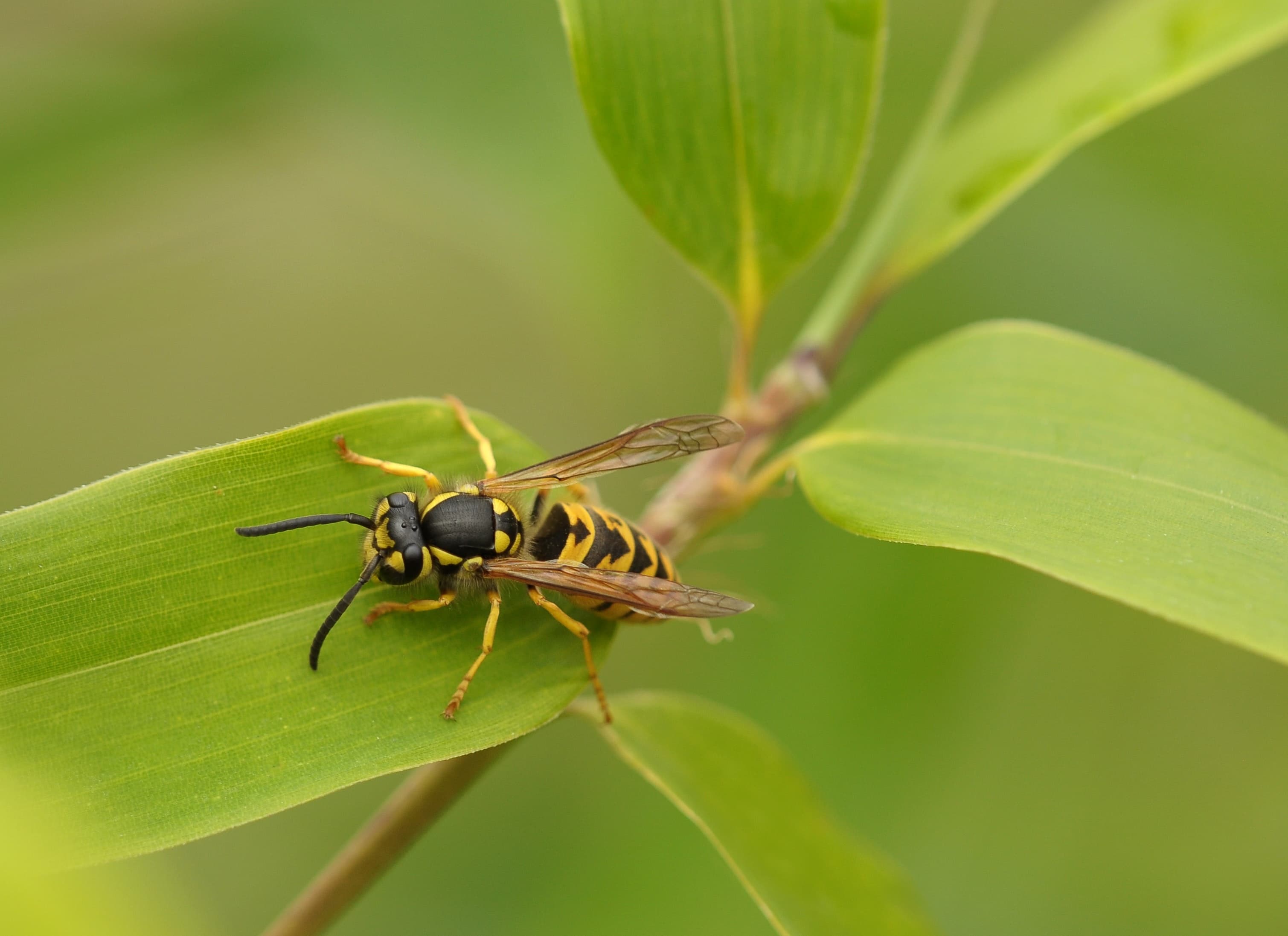
Wasp & Stinging Insect Control
Wasps, hornets, and other stinging insects can pose a serious risk to your family. We safely remove nests and apply preventive treatments to keep them from returning.
Safe Nest Removal & Prevention
Stinging insects like wasps, hornets, and mud daubers build nests on and around homes, creating a hazard for anyone nearby. Yellow jackets are particularly aggressive and can sting multiple times, especially when their ground or wall-void nests are disturbed during yard work or home maintenance. Paper wasps build exposed combs under eaves and overhangs, while hornets construct large enclosed nests in trees, shrubs, and on building exteriors. Attempting to remove nests without professional equipment and training can result in multiple stings. Our technicians safely eliminate active nests and apply preventive treatments to discourage rebuilding in the same locations.
- Nest Removal
- Yellow Jacket Control
- Hornet Treatment
- Preventive Barrier Sprays
Common Wasp & Stinging Insect Species We Treat
Wasps
Paper wasps build open, umbrella-shaped nests under eaves, deck railings, and overhangs. They are generally less aggressive than yellow jackets but will sting to defend their nest. Yellow jackets build concealed nests in ground cavities, wall voids, and attic spaces.
Hornets
Bald-faced hornets build large, football-shaped paper nests in trees, shrubs, and on building exteriors. They are highly defensive of their nest and can sting repeatedly. European hornets are also found in the region and may nest in wall voids.
Mud Daubers
Mud daubers build distinctive tube-shaped mud nests on walls, under eaves, and in sheltered areas. While they are generally not aggressive toward humans, their nests are unsightly and their presence indicates an insect prey population nearby.
Our Wasp & Stinging Insect Control Process
Every treatment follows our proven three-step approach to eliminate pests and keep them from coming back.
Inspect
We locate all active nests on and around your property, identify the stinging insect species, and assess the risk level based on nest location and proximity to high-traffic areas.
Treat
Active nests are treated with professional-grade products that eliminate the colony. Nests in accessible locations are removed after treatment. Ground nests and wall-void nests are treated in place.
Prevent
Preventive barrier sprays are applied to eaves, soffits, deck areas, and other common nesting sites to discourage nest construction. Quarterly treatments maintain this protection throughout stinging insect season.
Signs of a Wasp & Stinging Insect Problem
- Visible nests under eaves, on porches, in bushes, or attached to structures
- Increased wasp or hornet activity around your home, especially near food or trash
- Insects flying in and out of a hole in the ground, a wall gap, or a soffit opening
- Mud tubes or clusters on exterior walls (mud daubers)
- Stinging incidents while spending time outdoors near your home
Wasp & Stinging Insect Prevention Tips
Reduce your risk of infestation with these expert recommendations.
Keep garbage cans tightly sealed and rinse out recyclable containers.
Avoid leaving food or sweet drinks uncovered outdoors during warm months.
Seal gaps in siding, soffits, and around window and door frames where wasps could enter wall voids.
Inspect your home's eaves and overhangs in early spring for small starter nests — removing them early is much easier than dealing with established colonies.
Keep outdoor dining areas clean and wipe down tables after eating outside.
Frequently Asked Questions
Is it safe to remove a wasp nest myself?
We strongly recommend professional removal, especially for large nests or nests in enclosed spaces like wall voids or ground cavities. Disturbing a nest can trigger a mass stinging response. Our technicians have protective equipment and professional products designed for safe nest elimination.
Do you offer emergency wasp removal?
Yes, we offer same-day emergency service for stinging insect situations that pose an immediate safety risk, such as nests near doorways, play areas, or areas with allergy-sensitive individuals.
Will wasps return to the same spot after nest removal?
Wasps are attracted to the same sheltered locations year after year. Our preventive barrier treatments applied to common nesting areas significantly reduce the likelihood of nests being rebuilt in the same locations.
Ready to get started?
Call now and get $50 off pest control.
Call before 2pm and get same-day service.
Call Now and Save